
Remote Lifestyle With A Small budget: Practical Guide for Nomads
 beyondvega.andre@gmail.com
When planning a digital nomad life, money is a central concern. The remote lifestyle does not always feel glamorous, and expenses can be unpredictable. To stay flexible, travelers track daily costs, prioritize essential comforts, and seek affordable lodging. This approach defines Remote Lifestyle With A Small budget as a practical framework rather than a constraint.
For example, in Ilhabela, on the Brazilian coast, I once ate a simple bread roll with mortadella and cream cheese for lunch to keep costs down. Even so, I still managed to explore a new place and meet locals. Such meals illustrate balance between frugality and curiosity during a nomadic stretch.
That memory from a recent trip reinforces the lesson. It shows that savings do not erase discovery; they enable lengthier stays and broader experiences. I'll share more details in another post.
There are many paths into the digital nomad life. Each path comes with different financial needs.
Understanding your path— freelancing, running a small business, or a remote job — is the first step. It helps you know how much you'll actually need on the road.
The lifestyle can be unpredictable. But a handful of practical habits make it easier to manage.
For Remote Lifestyle With A Small budget, this article walks you through building a routine around a realistic budget. It avoids chasing a six-figure income.
Making Money on the Road
Income is usually the first worry for anyone considering this lifestyle.
A laptop and a wifi connection don't guarantee a paycheck. Freelancing platforms (Upwork, Fiverr, Contra), remote job boards (We Work Remotely, Remote OK), and niche communities built around specific skills are common starting points.
Others build income through teaching or consulting online, or through content — writing, video, or a blog like this one.
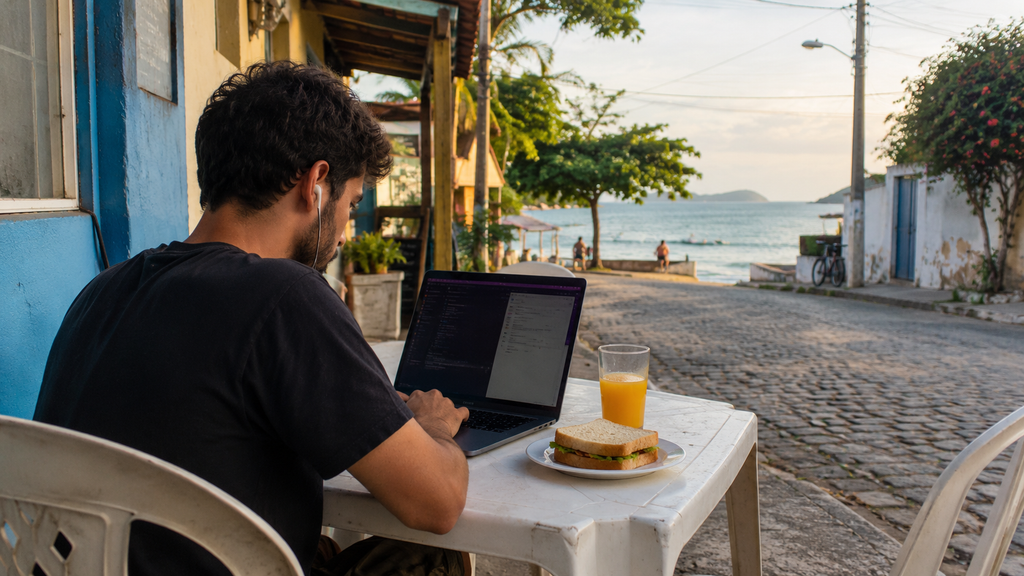
For now, my way of making money is working for a remote-first company.
In fact, I changed my career from physics to marketing specifically so I could work remotely, and eventually landed a role at a company built around remote work. With that steady salary — enough to live on — I started my digital nomad life.
All I really need is a place with good connectivity and a little space to set up as my office; that's enough to make me happy and see new places when I'm not working.
However, even with a solid job, relying on a single client, employer, or platform still carries some risk — one lost contract or role can undo months of planning.
Spreading income across two or three sources, even small ones, tends to hold up better when work slows down or a client disappears. Most importantly, you should have a money reserve.
Planning Your Money Reserve
Before committing to full-time travel, planning for a trip means thinking in terms of a reserve, not just monthly income.
A common approach is sizing it to your nomad cost of living, not your home country's — three to six months of expenses in the places you actually plan to stay, which can look very different depending on the destination.
A month in Budapest or Chiang Mai costs a fraction of a month in Lisbon or Mexico City. I usually use a Cost of Living Comparator to understand how much i will spent in average in each place.
This reserve also needs to absorb the unpredictable: a laptop that dies, a flight home for a family emergency, a visa run that costs more than expected. None of these are dramatic on their own, but without a buffer, any one of them can derail a month.
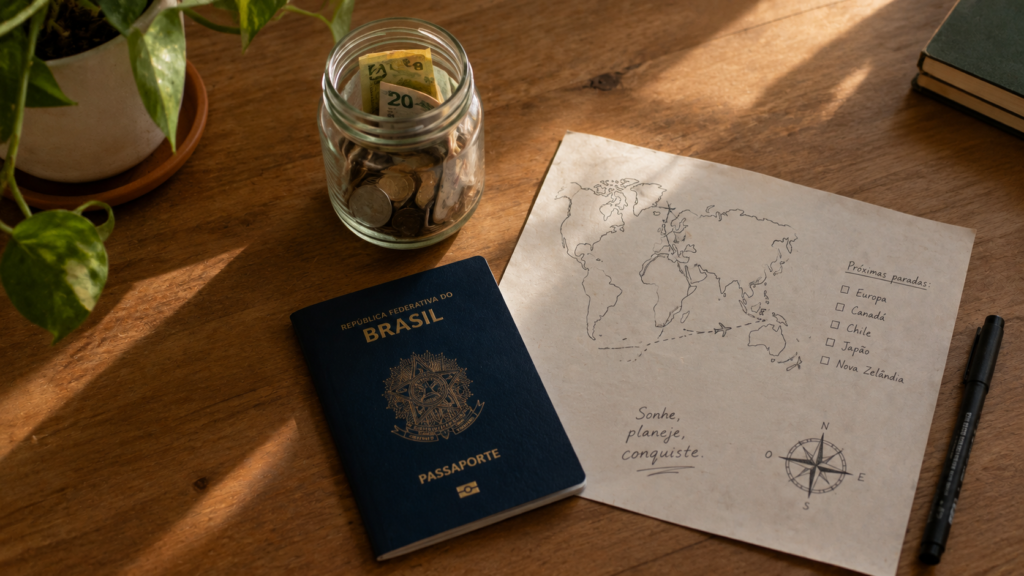
For me, what worked was starting the trip without saving the full six months of expenses upfront. Reserving that much money in just a few months felt unrealistic, especially since I was starting from zero.
So my tip is: save only enough to live for one or two months without any income, and build the rest of your reserve along the way with solid financial planning.
Simple budgeting frameworks can help decide where the reserve fits into the bigger picture. You can split your income across different needs following a rule like the 50/30/20 split (needs, wants, savings).
Another tip for saving money: when your income lands in your account, the first thing you do is send it to your reserve account. This way you won't spend it on unimportant things, and you'll reach your reserve goal while you travel.
So how do you organize all of this? The next section will help you with that.
Use Apps and Sheets to Organize
Tracking money across currencies and countries is harder than tracking it at home, so finance organization for travelers usually comes down to a few tools that earn their place quickly.
Digital banks built for travelers — Wise, Revolut, N26, Monese — cut down on transfer fees and let you hold multiple currencies without much friction.
Budgeting apps that split money into separate "pots" for rent, food, travel, and emergencies make it easier to see where a paycheck is actually going.
For anyone who prefers something simpler, a Google Sheet or Notion budget template does the job just as well — there's no need to build one from scratch when plenty of free templates already exist online.
The tool matters less than the habit of checking it weekly.
Personally, I prefer Google Sheets because of how simple it is. There, I can log how much I spend each day, broken down by category. I've tried a few different apps before, but I never stuck with them the way I needed to — Google Sheets is simple and direct.
So my advice: check it weekly, look at the changes, see how much you're saving and how much you'll need, and you'll travel with a lot more peace of mind.
Instead of Earning More, Spend Less
Cutting cost is usually a faster lever than growing income, especially early on. A few areas tend to make a real difference:
- Accommodation — monthly Airbnb stays often come with discounts of up to 40% compared to nightly rates, and house-sitting platforms (Trusted Housesitters, Nomador, Mind My House) can bring the cost down to zero in exchange for watering plants or feeding a cat.
- Transport — public transport, walking, and renting a bike usually beat private taxis by a wide margin. Comparing flight prices with a VPN switched to a different country can also turn up a cheaper fare for the same route.
- Food — cooking at home and shopping at local markets stretches a budget much further than eating out daily. Restaurants with a menu only in the local language are often cheaper than the ones translated for tourists.
- Workspace — cafes and coworking spaces both work, and co-living setups often bundle a place to sleep, a place to work, and a built-in community into one price.
One thing worth not cutting: travel and health insurance. Providers built for nomads (SafetyWing, World Nomads) are priced reasonably enough that skipping coverage to save a little each month rarely makes sense once you weigh it against the cost of an actual emergency abroad.
Conclusion
For a Remote Lifestyle With A Small budget, you don't need six figures freelancing from a beach.
Additionally, habits matter over months of travel. These include diversified income, a reserve sized to reality, and a simple tracking system.
Moreover, know when spending less beats trying to earn more.